
How to Bake Soft Sourdough Buns
Soft, fluffy sourdough buns with a golden crust, perfect for burgers, sandwiches, and everyday meals.
These soft sourdough buns are made using the same simple ingredients as a classic sourdough loaf but shaped into individual portions for the perfect sandwich roll. Naturally leavened with sourdough starter, they develop incredible flavour while remaining light and tender inside. Proofed in small rattan bannetons for a professional finish, these homemade buns are ideal for burger buns, lunch rolls, or serving alongside soups and salads. Whether you're baking for family meals or entertaining guests, this recipe is an easy way to enjoy fresh, bakery-quality sourdough buns at home.

What You'll Need:
● Active sourdough starter – Make sure it's nice and bubbly before you begin.
● High-grade flour – This will give your dough the structure it needs to rise beautifully.
● Filtered water – Filtered water is best as chlorine can inhibit the yeast.
● Salt – Adds flavor and helps to tighten the dough.
● A mixing bowl – Large enough to allow the dough to double in size.
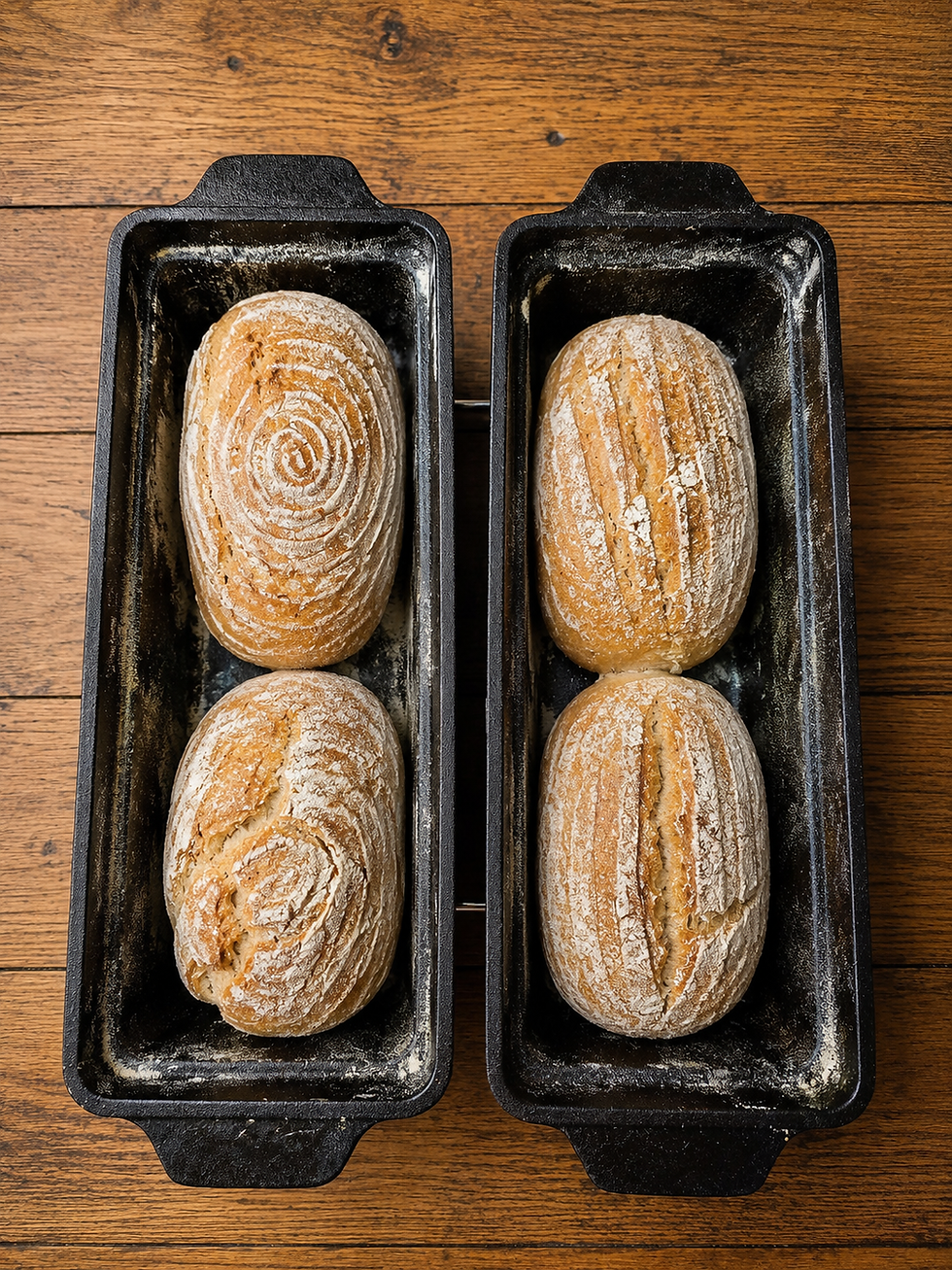
● Two rectangular Dutch Ovens are ideal for achieving that perfect crust.
Note: Use the same sourdough starter you use for your regular loaf.
Step-by-Step Guide:



Step 1:
Mix the Dough
In a large bowl, combine:
● 600g of high-grade flour
● 400g of filtered water
● 50g of your active sourdough starter
● 10g of salt
Mix everything together until there are no dry spots. The dough will be shaggy and sticky—this is completely normal. Cover with a damp cloth and let it rest for about 30 minutes.
Step 2:
Knead and Stretch
Instead of traditional kneading, use the stretch-and-fold method to strengthen the dough. Wet your hands, gently stretch one side of the dough upwards and fold it back over itself. Rotate the bowl and repeat four times.
Repeat this process every 30 minutes for the next 2 hours, keeping the dough covered between each set.
Step 3:
First Rise (Bulk Fermentation)
Cover the dough and leave it somewhere warm until it has almost doubled in size.
We like using a Pyrex jug to easily monitor the rise. Depending on your kitchen temperature, this usually takes around 4–6 hours.
Step 4:
Divide and Shape
Turn the dough onto a lightly floured bench.
Divide it into four equal pieces (approximately 265g each). Gently shape each piece into a smooth round. Let them rest for 10–15 minutes before tightening each ball with a final gentle shaping to build surface tension.
Step 5:
Second Rise (Proofing)
Cold Proof Overnight
Dust each small rattan basket generously with corn flour to prevent sticking. Place each dough ball seam-side up into its basket. Cover loosely and refrigerate for 8–12 hours.The slow overnight proof develops flavour while helping each bun hold its shape.
Step 6:
Preheat the Oven
Preheat your oven to its maximum temperature (usually around 230°C).
If you're baking in a Dutch oven, preheat it as well to achieve the best oven spring.
Step 7:
Bake Your Loaf
Remove the buns from the fridge and carefully turn them into your Dutch ovens. Score each bun with a single slash or small cross. Bake at 230°C for 20 minutes with the lid on. Remove the lid, reduce the oven temperature to 220°C, and bake for a further 10–15 minutes, until the buns are a rich golden brown. For the best results, check the centre of a bun with a thermometer. It should reach 94°C before removing it from the oven.
Step 8:
Cool and Enjoy
Transfer the buns to a wire rack and allow them to cool completely before slicing. For softer sandwich buns, lightly brush the tops with melted butter while they're still warm. They're perfect for burgers, lunch sandwiches, breakfast rolls, or simply enjoyed with butter.
Final Tip:
Every sourdough starter and kitchen is different, so don't rely solely on the clock. Watch your dough—it should feel light, airy, and slightly puffy before baking. With every batch, you'll become more familiar with how your dough behaves, making each bake even better.
Frequently Asked Questions:
1. Can I make these sourdough buns without rattan bannetons?
Yes. While small rattan bannetons help the buns keep their round shape, you can use small bowls lined with a clean tea towel and generously dusted with flour. The buns will still bake beautifully.
2. Why are my sourdough buns dense?
For extra-soft buns, brush them with melted butter immediately after baking. Storing them in an airtight container once completely cool will also help keep the crust soft.
3. Why do you proof the buns in the fridge?
Cold proofing slows fermentation, allowing the dough to develop more flavour while making it firmer and easier to score. It also helps the buns hold their shape during baking.
4. Can I freeze sourdough sandwich buns?
Absolutely. Allow the buns to cool completely, then place them in a freezer-safe bag or airtight container. Freeze for up to three months. Defrost at room temperature or warm them in the oven before serving.
5. Which Dutch oven should I use for my buns?
While you can bake all four buns together in a large round Dutch oven and pull them apart after baking, we've found that the best results come from using two rectangular Dutch ovens, with two buns baked in each. This gives each bun more room to expand, promotes more even browning, and creates a beautifully shaped sandwich bun with a softer crust around the sides.