


How to Reactivate Your Dehydrated Sourdough Starter
Congratulations on taking the first step towards baking with a live sourdough starter. Your dehydrated sourdough starter contains dormant wild yeast and beneficial bacteria that simply need water, flour, and a little patience to become active again. Within a few days, you'll have a healthy, bubbly starter ready to bake delicious homemade sourdough bread.
Need a dehydrated starter? You can buy one from us here,
What You'll Need:
-
Unchlorinated or filtered water
-
Bread flour or high-grade flour
-
Digital kitchen scales for accurate measurements
-
A breathable cover, such as a loose lid or clean cloth
-
A warm place to keep your starter while it reactivates
-
In cooler months, you may need a starter Incubator and Proofing Box.
That's it! Once you have these simple items ready, you can begin bringing your sourdough starter back to life. You can find our starters and care equipment here
Step-by-Step Guide:
Day 1: Wake Up Your Starter
-
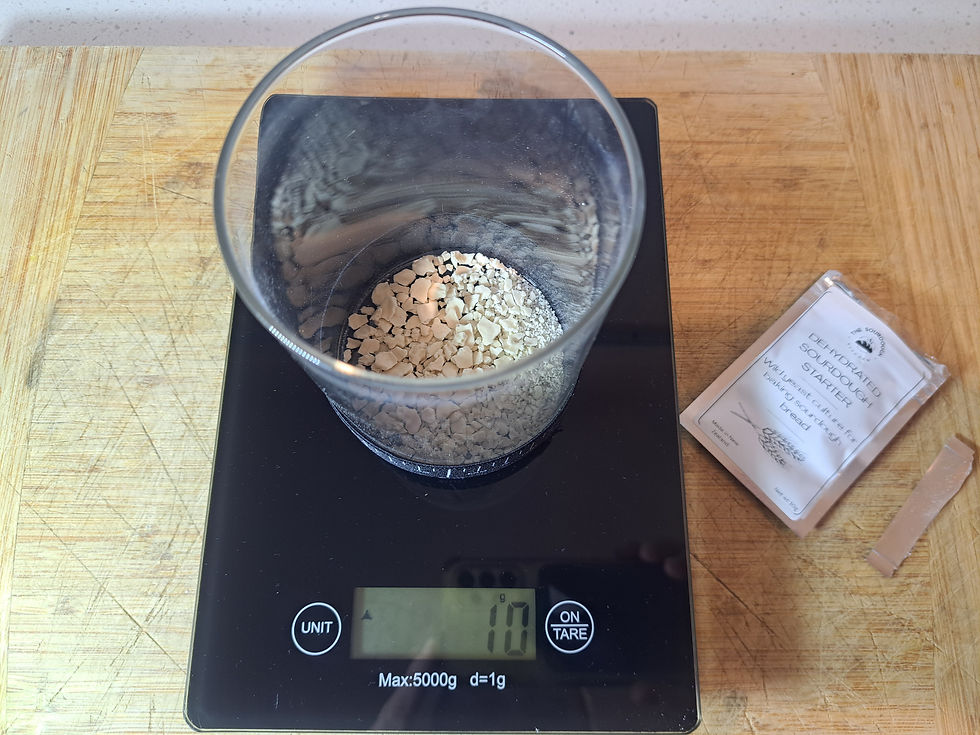
Empty the entire packet of dehydrated sourdough starter into a clean jar.
-
Add:
-
20 g warm water
-
20 g bread flour (high-grade flour)
-
-
Mix thoroughly until there are no dry flakes remaining.
-
Cover the jar loosely with the cloth cover and leave it at room temperature for 24 hours. For best results, keep your starter at 24–28°C, with 26°C being ideal for reactivation. In colder weather, especially during winter, you may need to use a sourdough incubator or another warm spot to maintain a consistent temperature and encourage healthy fermentation.



Day 2: First Feed
-
After 24 hours, discard half the starter and add:
-
40 g bread flour
-
40 g water
-
-
Mix well and cover loosely again.
-
After mixing, your starter should have the consistency of a thick pancake batter or smooth yoghurt. It should be thick and goopy, but still easy to stir— not dry or dough-like, and not so runny that it pours like water. If needed, add a tiny splash of water or a pinch of flour to achieve this texture.
-
Look for bubbles! Small bubbles throughout the mixture or on the surface are a great sign that your sourdough starter is beginning to reactivate. As the wild yeast and beneficial bacteria wake up, the starter will become more active, develop a pleasant tangy aroma, and eventually start to rise after feeding.


Day 3 and Beyond:
-
Continue discarding half, then feeding your starter once every 24 hours with:
-
40 g bread flour
-
40 g water
-
-
Within a few days, you should begin to see bubbles and notice the starter rising after feeding. Once it reliably doubles in size and has a pleasant tangy aroma, it is ready to use for baking.


Storage:
Keep any unopened dehydrated starter in a cool, dry place away from direct sunlight. Once reactivated, treat it like any live sourdough starter by feeding it regularly and keeping it at an appropriate temperature while active. If you’re not baking frequently, simply store the starter in the refrigerator between bakes and feed it before your next use.
Final Tip:
Sourdough is naturally unpredictable. Don't worry if your starter takes a little longer to become bubbly, especially in cooler weather. Keep feeding it consistently and be patient—healthy starters often reward persistence.

Starters & Care Range:


Frequently Asked Questions:
1. Do I need to follow the measurements exactly?
No. The measurements in our guide are designed to make the process simple and repeatable, but they don't have to be perfect. If you're slightly over or under with the flour or water, your starter will usually be just fine. The most important thing is to watch how it behaves and adjust if needed. A healthy starter should become bubbly, rise after feeding, and have a pleasant sour aroma.
2. How often should I feed my reactivated starter?
For most people, feeding once every 24 hours during reactivation works well. To make it easy to remember, use the timing belt shown in our photos to mark the last feeding time. Once your starter is active and doubling reliably, you can move to a maintenance schedule that suits your baking routine.
3. My starter isn't bubbling yet. Is something wrong?
Probably not. Some dehydrated starters wake up quickly, while others need several feedings before showing strong activity. Keep it in a warm spot, continue feeding as instructed, and be patient. It's common for a starter to take 2–4 days to become lively.
4. Can I use a different type of flour?
Yes. Bread flour and plain flour both work well for reactivating a dehydrated starter. Wholemeal or rye flour can also be used and may even encourage faster activity. If you switch flours, don't be surprised if the smell, colour, or consistency changes slightly.
5. How do I know when my starter is ready to bake with?
Your starter is ready when it reliably rises after feeding, is full of bubbles, and roughly doubles in size before beginning to fall again. Every kitchen is different, so use these signs rather than relying only on the clock. Once it reaches this stage, it's ready to make delicious sourdough bread.
6. What temperature should I keep my sourdough starter at?
The ideal temperature is 24–28°C, but don't worry if your kitchen isn't exactly in that range. Cooler temperatures will simply slow fermentation, while warmer temperatures will speed it up. The key is to watch your starter and adjust as needed. In cooler climates or during winter, using a starter incubator or proofing box can help maintain a consistent temperature and encourage strong, reliable activity.